
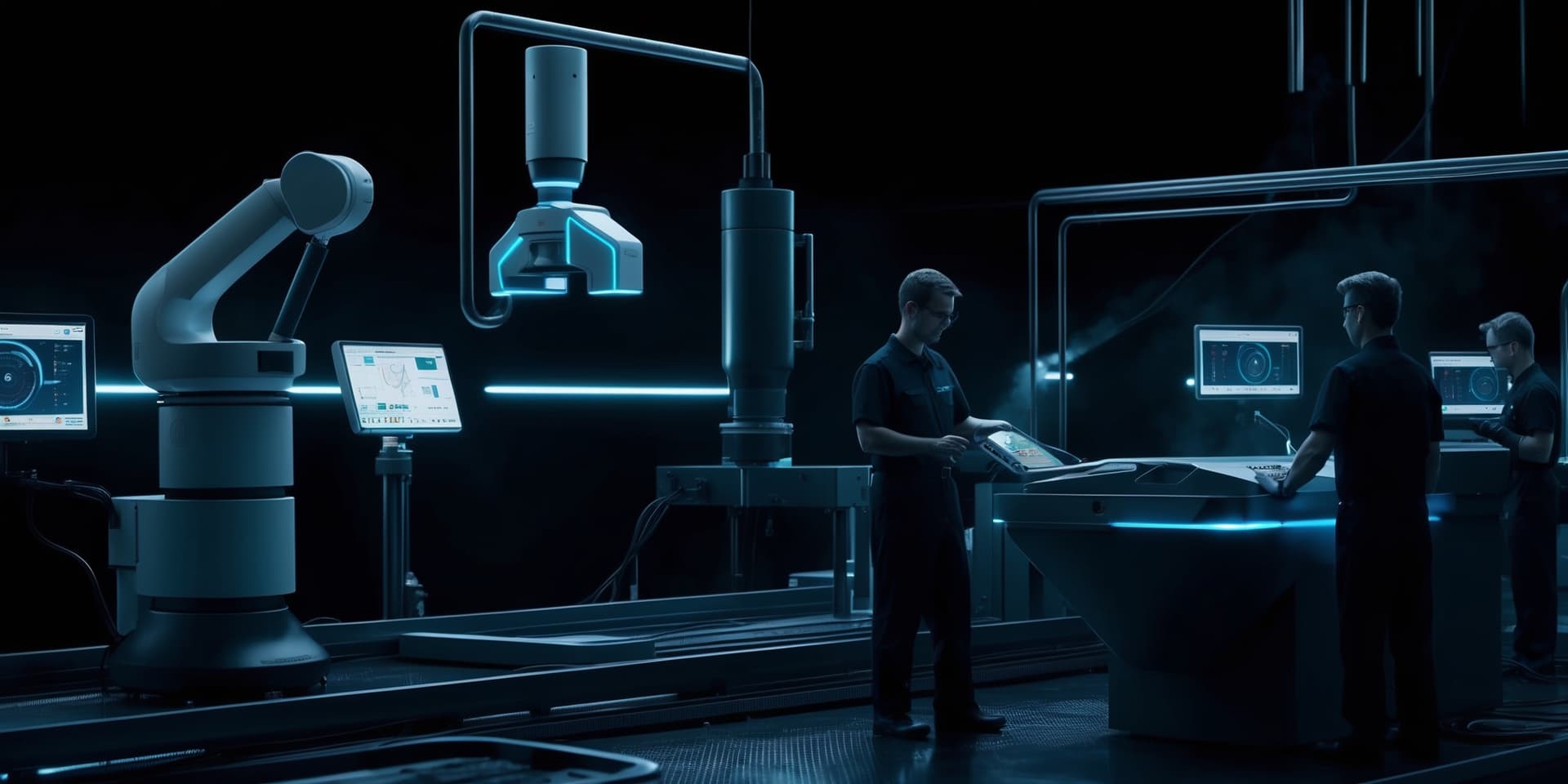
Quality Control in Production: In Brief
Quality control in production represents much more than a simple verification step: it is an integral system that determines the survival and growth of manufacturing companies. Statistics show that effective quality management can reduce operational costs by 25 to 40%. In a world where competition is fierce and customer expectations continue to rise, manufacturing quality is no longer an option—it is an absolute necessity that directly influences the profitability, reputation, and longevity of the business.
Fundamentals of Quality Control in Production
Definition and Scope of the Quality Control System
Quality control in production encompasses all processes, methods, and tools used to ensure that a product meets defined specifications. This quality control system is involved at every stage, from the receipt of raw materials to the shipment of the finished product.
Industrial quality control methods must be rigorous and documented to ensure complete traceability.
Essential Components of Quality Inspection
- Inspection of raw materials based on strict criteria
- In-process quality controls
- Systematic final testing
- Complete documentation and traceability
- Regular calibration of measurement equipment
Advanced Measurement Technologies
Modern quality control equipment offers exceptional measurement capabilities:
Next-generation 3D scanners allow for high-precision dimensional inspection with analysis times reduced by up to 75% compared to conventional methods.
Current vision systems automatically detect surface defects with a precision of up to 0.1 mm, enabling real-time quality control on production lines.
Modern CMM (Coordinate Measuring Machines) achieve control tolerances of up to 0.001 mm on critical components, ensuring maximum accuracy for high-precision parts.
Organizational Impact of Quality Control
The implementation of a quality control production system can generate significant benefits:
The costs of non-quality could represent up to 15-20% of revenue in the industry.
Effective quality control production could allow for a reduction in reworks by up to 35%, depending on the sector.
Customer satisfaction rates could increase by up to 25% with a robust quality system.
Quality certifications can potentially increase a company’s value by up to 20%.
Quality Culture
Establishing an effective quality culture requires a structured approach:
Management Commitment:
- Clear definition of quality objectives
- Allocation of necessary resources
- Active participation in quality reviews
- Regular communication about performance
Empowerment of Teams:
- Improvement suggestion programs
- Autonomous quality teams
- Recognition systems
- Measurable quality objectives
Transparent Communication:
- Accessible quality dashboards
- Weekly quality meetings
- Sharing of best practices
- Systematic feedback loops
Industry 4.0 and Quality Control in Production
The integration of quality control in Industry 4.0 transforms traditional methods:
Automation of Inspections:
- Collaborative inspection robots
- Automated 3D vision systems
- Real-time online control
Big Data Management:
- Advanced statistical analysis
- Real-time dashboards
- Complete digital traceability
Artificial Intelligence:
- Automatic anomaly detection
- Defect classification
- Process parameter optimization
Interconnectivity of Tools:
- Machine-to-machine (M2M) communication
- Integration of quality data into the MES (Manufacturing Execution System)
- Real-time synchronization of controls
- Automation based on quality results
- Automatic process adjustments
- Interconnected traceability
Globalization and Manufacturing Quality
The globalization of supply chains complicates quality control in production:
Multiplicity of Suppliers:
- Standardized regular audits
- Harmonization of requirements
- Centralized quality portal
Differences in Standards:
- Alignment of international norms
- Training on local specifics
- Multilingual documentation
Logistical Constraints:
- Reinforced incoming inspection controls
- International traceability
- Management of non-conformities
Conclusion
Quality control in production is a crucial strategic investment that determines manufacturing competitiveness. A robustly implemented quality control production system could reduce operational costs by up to 50% over three years while establishing a sustainable competitive advantage. The emergence of Industry 4.0 technologies transforms industrial quality control methods, with increasingly intelligent and interconnected systems. In a demanding manufacturing environment, adopting advanced measurement and statistical analysis technologies, coupled with a strong quality culture, becomes essential for maintaining operational excellence.